Strategy Evolves, Does your Business?

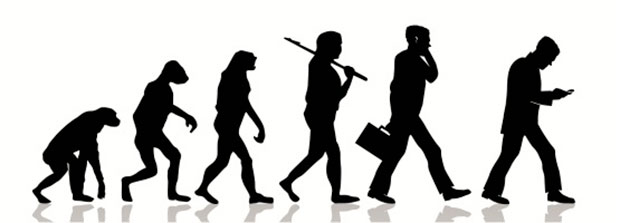
evolution-of-technologyHow did your business strategy come about? Was it planned out in advance in the boardroom, or was it done by some type of trial and error?  Did you start out knowing exactly what you were going to become? We started with a plan, but it has evolved into one that has taken time and been filled with trial and error.

Efficience came about as a company because we had an opportunity to come together and complete a big ERP system for companies that sell copiers to businesses. My partner, April Cox Abboud, was consulting in this space, came upon this opportunity and we started the company around this project. Our intentions were to build it and sell it, over and over, to other dealers and have a winning formula for success.

For many reasons, this didn’t happen and we went on to work on Software as a Service (SaaS) products. We have been working on a handful of ideas to get out there, and we have had limited success with one, and not much at all with the others.  As I continued to see and read what was happening in the world, we decided to turn into a mobile app development company and help individuals take their ideas to the market, along with helping companies do the same.

We didn’t have a certain vertical to go after in the mobile space when we started, but knew that we wanted to have one. As we have worked to build-out mobile apps for some clients, we have now come about an opportunity with one particular client in the industrial cleaning arena. That client wants to partner with us to build mobile apps for their network of other companies. This is a great opportunity to push a success story out to these other companies and fill a need that isn’t currently being filled.

I have shared with you all for a while that we have been looking for a vertical in the SaaS, and now in the mobile space, to go after.  As trial and error would have it, we have stumbled upon this opportunity.  Our friend Rasmus Ankersen, whom I talked about in last week’s blog, discussed this in his own blog post back in March, which focused around strategy. When Pfizer was testing a drug to treat high blood pressure in the 1980s, they found it not to be that effective, but the men in the trails didn’t want to let go of their samples. Why? Because they were having a better sexual experience and soon the drug Viagra was born.

Jim Collins, in his book Great by Choice, discusses how empirical creativity was used by the companies that excelled over their competitors by 10 times. This basically means that when we talk about strategy, what you start with gives you data that you can work with, and create from there using real world feedback. Through trial and error, it comes about and sometimes ends up being nothing close to what you started out to accomplish.

I work hard to be open, adjust strategy and apply some creativity to the real world feedback that comes in as we go. How about you?

Is Geo-Fencing on Your Map?

map pinsAs we continue to build mobile apps for clients, the advantages resulting from these apps are appearing limitless.  I have been in Charlotte this week for the EO Nerve Conference.  When I called for a taxi, they said that I can download an app that will send a taxi to me.  Not only that, but I can follow the taxi’s location as it comes to pick me up. How cool is that? This is the new wave of location-based services that is getting more popular and will help create a lot of conveniences, marketing opportunities and productivity.

Chris Shaffer, our technology lead at Efficience, says “The convergence of technologies, such as GPS and mobile broadband, allows users to leverage resources in ways that were unthinkable only 10 years ago.”  According to Shaffer, “Geo-fencing is one such feature that allows devices to become ‘location-aware’ by tracking through GPS or location-based services.”

We will devise a lot of new ideas and reasons to have this working for us in all kinds of situations.  Geo-fencing has created a new source of information that will revolutionize the way we interact with the world around us.

When you have the app of your favorite restaurant, it will know when you cross the virtual fence that they will designate, say like 3 miles from them. Restaurants will have ability to send you a notification of the special dish they have tonight or some type of discount. You already love to eat there and they just entice you to come back to spend more money with them, instead of all the other options you may have.

According to a study done by Pew Charitable Trust, 58% of adults access the internet through their mobile devices, which has been a big conversion away from the desktop. Smartphones are allowing us to get info and make choices that we didn’t have the information to do on the fly before. We check prices, watch movie trailers, and read about competitor choices as we are making decisions to spend our dollars.

Those that are connecting with their customers this way will have more flexibility, since a marketing campaign can be day-to-day or week-to-week. It can be tailored to the data that customers choose to give us so that we can meet their direct needs. Small businesses with limited budgets will have a much better way to compete with the big boys who wield massive budgets, just by having access to this technology. This will be mainstream in the not-too-distant future, but those getting in first will have a competitive advantage to attract customer dollars and grow their revenue sooner.

What are you doing to be ahead of the curve and benefit from location-based marketing?

It’s a Give and Ask Business World

I have written a few blogs from David Meerman Scott’s books and blogs because they relate so much to the social media world we are in today. Scott’s work is all about creating a worldwide rave around what you offer, by putting valuable content out on the web that will build credibility and create value for others. He also discusses using current events to leverage more interest and exposure around what you offer the world.

<a title=”Amanda Palmer: The Art of Asking” href=”

Amanda Palmer: The Art of Asking

So I will ask you, are you giving away content on the web that is valuable to others – especially your clients – that attracts them to you? That is the focus of a recent blog that Scott wrote that was based on a TED talk titled “Amanda Palmer: The Art of Asking.” In this very interesting TED talk, she discusses her experience of going from a bridal statue and giving out flowers for money, to an alternative rock singer giving her music away for free.

From the experience of learning to ask for money on the streets, she gains an awareness of a connection with people that, to her, was profound. This connection, she realized, overflowed to how she blogged and related to her crowd in that they just gave her money. She then peeled away from her label and did a crowd-funding approach. She hoped to raise $100k, and instead, she raised $1.2 million. She realized that people just want to help when you build a connection and just trust them.

So from a marketing approach, what David recommends is that you give your value content – like blogs videos, infograpahics and full-length ebooks. He says give your best stuff away for free, and build the relationship that comes with being vulnerable.

Next, do as Amanda does and ask them to help you. She says, “Give and receive fearlessly. Ask without shame.” Then, just like the video discusses, David asks if you need a speaker at your next conference.

What are you giving away and asking for help from those whom you provide value?

Are You Confronting the Brutal Facts?

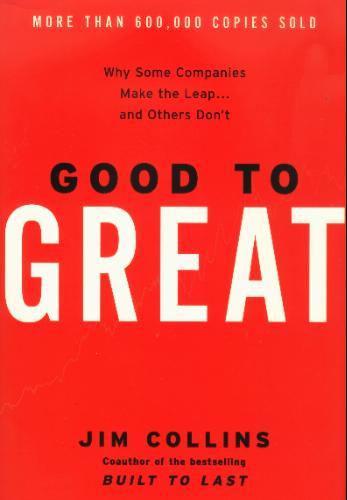
good to greatWe have had a nice run in the markets over the past few weeks, hitting record highs for seven consecutive days. It would seem like good times ahead and I would so much like to jump on that bandwagon. I have seen this before and it makes me very cautious, given what is probably ahead. With any market and economic difficulties, there is always opportunity. The key signature of the DNA in a real entrepreneur is always being in search of opportunities in any environment, and then acting on them.

When looking for opportunities, we must first practice the Stockdale Paradox, which is coined by Jim Collins in his book Good to Great. In the book, Admiral Jim Stockdale makes observations of those that survived being prisoners of war in Vietnam and those that did not. Admiral Stockdale was there for eight years and endured the most brutal of situations.

When asked “Who did not make it out?” Stockdale replied, “The optimist.” He shared that they would say, we will be out by Christmas, Easter, and Thanksgiving, and when those markers came and went, the POWs would die of broken hearts.

He went on to say to Jim “This is a very important lesson. You must never confuse faith that you will prevail in the end – which you can never afford to lose –with the discipline to confront the most brutal facts of your current reality, whatever it may be.”

So what are the brutal facts of our reality? We have a huge amount of debt ($16 trillion) that is as much as the combined total of all the goods and services transacted in one year for the US economy. Each year the bureaucrats are spending $1 trillion more than they take in from taxes, so we are adding a trillion to the total debt each year. The worst part is they don’t show any desire to stop spending! We have major uncertainties of how all the tax increases, more government controls, and medical health care changes will affect our businesses.

The fear and uncertainty makes people sit and wait it out, for the most part. We are experiencing some positives now because of pent-up demand. Some areas don’t have enough new homes to account for the demand. Some businesses are spending on things that they have been putting off for a long time and can’t wait any longer.

This is not the environment of record-breaking stock markets that means things will change. I was in the investment world when the Fed flooded the markets during the late 90s and worried about lots of things, but mainly Y2K. This money mostly went into stocks and drove the markets to a massive bubble that soon burst. Sadly, I watched my money and that of so many others lose unfathomable sums.

Because of the brutal facts and my experience, I am being careful about the markets and business investments. I am also keeping an eye on any opportunities that may arise, given major changes that may occur. Remember that companies like General Electric, IBM, Disney, Burger King, Microsoft and Apple, all were founded in major recession or great depression. Opportunities are not limited to the good times.

Follow the Big Trends or the Small Ones?

Aside

I have talked to a lot of people about the big trend of mobile, the growth in this area, Imagehow it is changing the way we do business, and how if we don’t want to be left behind, we need to adapt. Some of this has a longer time horizon and some of it needs to be thought about in the short-term. The point is that this is a Macro trend that is happening and one that may be less of a concern than building your small tribe of followers that make a difference to the revenue and profits of your company.

Seth Godin’s blog on Macro Trends Don’t’ Matter so Much, makes a point that I agree with for the more focused, short-term aspects that drive your business.  He says that the Macro trends, like internet subscribers some year in the future, or the number of Spanish speakers as a percent of world population, are not the key drivers to your growth and the group you are after.  We could add things like, Who will have more in Apple’s IOS or Android’s platforms by 2020? What percent of the world total output will China make up in the next 20 years?

These trends are nice to watch, and some of you may want to think about it more than others. However, the key is that most companies and organizations need dozens, hundreds, or thousands to make a difference in their world. They don’t need access to all Spanish speakers, to all internet subscribers, or all those on Apple’s platform. What they need is the ability to spread the word among a tribe of followers that are like-minded and passionate about your unique “purple cow” offering.

This is where you what to really drill down into who your client is and what it is he wants. Robert Bloom, in his amazing book “The Inside Advantage,” gives us a step-by-step process for drilling down to the true look and feel of who your client is and what is unique about what you are offering him.  Knowing your customers in this way will allow the laser-like focus to zero in on your tribe.

Finishing up in Seth’s blog, he says that the big trends are a numbers game, and that by realizing that, you are “treating the market as an amorphous mass of interchangeable parts.”   You realize the micro is more important than the macro and that it is about the people – that we are individual human beings and we have names, desires, wants and interest.

What is your micro group that you are focused on?

Adding Context to Your Decisions

brain cogs (988x1024)When we look at the world, a lot of times we miss the aspect of context on how we look at things. This has importance in making business decisions of all sizes and shapes. This can show up a lot with people’s decisions and with how they look at their competitors and strategies.

I was reminded of this on reading Rasmus Arkersen’s recent post of the power of contextual intelligence. I have written about Rasmus before and his work continues to intrigue me. I first met him when he spoke at an EO regional conference in Bangalore, India, a few years ago. I wrote a blog about his work on human potential.

This recent discussion was on how Rasmus asked people which would be better to hire – an Apple or Microsoft sales person. He experienced most people would say Apple, because of all the hype on the products and Steve Jobs. But what if it was all that hype that made it easy for the Apple guy to sell more when the level of sales was not as high as Microsoft, but was due to a much better sales ability? This is the contextual intelligence that Rasmus is talking about when he says to look deeper and below the surface to learn how the numbers are achieved.

Anthony Robbins also talks about this in his discussions around metaprograms. He states that by understanding how people sort things, you can communicate better with them in the right context. According to Robbins, some people sort primarily by feelings or logical thoughts. Most of us know that, but did you know that some people can even sort by food? When their thoughts are focused around food, you may ask them directions, only for them to tell you to go down to the McDonald’s and turn there. Robbins says, “If you ask them about the movies, they will talk about the concessions stand. If you ask them about the wedding, they will discuss the cake.”

I also experienced this in my Investment days in what is called “survivorship bias.” This occurs when you look at performance over, let’s say, a group of mutual funds during an imaginable 20 years, and it looks good at an 8% return. What it doesn’t factor in are the funds that performed badly and were closed down or merged out of existence. If you added this in over that time period, you may have a percent or two lower rate of all those funds.

These all are examples of looking at the full context of a situation and getting a complete understanding of why something is what it is. This is what Rasmus says is contextual intelligence, and when all is fully factored, may help you make better decisions.

What type of decisions do you have ahead that may need a little contextual intelligence?

Partnering for Growth

A few weeks back, I shared what we are dong to move forward on the path of concentration around a certain focus with mobile. We have built a mobile app platform that is customizable and appropriate for our focus of working with marketing companies. This has been an evolution for us, and one that recently has had a lot of the details come together.

As I shared before, mobile is growing and the smart phone is being adopted with exponential growth. It has provided opportunity for businesses to connect with their customers that has not been possible before. With the build-out of an app, you can have relationships with your customers or employees that is right in the palm of their hands. The convenient access to knowledge, specials, promotions, events, sales and customer data is significant.
imagesI am in Charlotte for a few days to meet with marketing companies and build relationships that will benefit each of us. We will discuss our approach and platform to make their lives easier, shorten the time to production, and create more profit opportunities. With each of us focusing on what we do best, there are lots of positive aspects to this type of partnership. We focus on building and incorporating the design, and the marketing companies focus on their strengths of design and creativity.

This gets us back to the area of focusing around a certain vertical and making the business process one that is scalable. This approach allows the process to be repetitive and efficient. When you produce different custom software projects, like we have in the past, they require a lot of effort to ramp up and go through a learning curve. But when you do, there is no long-term benefit for that extra effort. This focus will allow us to get a benefit from the learning curve of building the platform and using it again and again.
I am excited about this change in direction and having a certain type of client to focus on – a client with the need to fill a gap that is present when their own clients tell them they want to have a mobile app for their businesses. This will allow us to say “no,” when we are approached to do things that will take us down a path of lost investment and cost, instead of being profitable.
How are you staying focused, scaling and saying “no” to the things you shouldn’t be doing?

The Goal Is Antifragile

Some of you may remember the book, “The Black Swan,” that I have written quite a few blogs on in the past. The reason I have shared from Nassim Taleb often is his philosophical thinking about the world and investing is so insightful and unique that it makes for serious contemplation about the world in which we live.antifragile_the_book

Well, Taleb has done it again. He has written a new book that is just starting to sink in and open my eyes to the implications of his thinking. The book is “Antifragile: Things That Gain from Disorder.”  Here Taleb presents to us that things will get more stable and stronger when they have ongoing shock and turmoil, compared to things that are breakable or fragile. That the antifragility of some comes at the expense of the fragility of others.

This happens in the biological world where some parts of the inside, like within a cell, may need to be fragile for the large structure to be antifragile. Taleb uses the example of restaurants in the book, saying that each one is fragile in that they come and go – they compete and go out of business regularly. The local restaurant collective is antifragile with its system providing quality, whereas central control, Soviet-style cafeteria food would be the alternative.

Fragile type systems depend on everything be exact and a planned course. If you have deviations, they are more harmful, so this needs to be more predictive in its approach. The opposite holds true for antifragile, where you don’t worry about deviations and the possible different outcomes that may occur as you move forward.

When you see the world through this lens, it helps put perspective on what works and doesn’t work.  This would mean not bailing out on the things that don’t work, and not relying on permanent administrations and forecasting departments that think they can predict the future.

How do you help yourself to become more antifragile? You learn to love mistakes. When you make them a lot, but at a level that is small and reversible instead of large and destructive, you put yourself in a situation to evolve and stay alive. What you may consider is the random aspect of trial and error, is not so random if it is carried out in a rational approach, because the error is used as information.

For the entrepreneur out there, Taleb’s work has a lot of implications for your strategy and thinking in how you approach your competitors, market place and the world in which you live. I will get into that more in future blogs.

As I’m sure you have noticed, we have changed the blog over to a new format, so it will look a little different to you.  Thanks for reading.

Can a Meeting be a Game Changer?

meetings-suckWhy is it that so many of us don’t like meetings?  I personally like the feeling of getting a bunch of innovative people together generating better and smarter ideas than any one of us could come up with on our own.  Most people have a hard time seeing a meeting as a game changer.  Would you think a meeting could speed up change or push you ahead of the competition to become the global leader in the industry?

Well that is exactly what happened with Wal-Mart.  Their Saturday morning meetings created a lead time in the industry and catapulted Wal-Mart up to one of the highest grossing companies in the world. You might say, “Excuse me, a meeting did that?”  Well, in Verne Harnish’s book “The Greatest Business Decisions of All Time,” Hank Gilman makes that case.

It began back in the beginning when Sam Walton started this Saturday morning meetings in his first store in Bentonville, AR.  He held these meetings to gather all of his people in one place to figure out what was selling and what was not.  He would look at different metrics and determine what needed to be changed based on what had happened over the previous week.  Then, with the managers brainstorming, they would make changes, put items on sale that needed to go, and move things around to get noticed.  After this, they immediately went out and implemented these ideas to take advantage of the strong weekend activity.

Stay ahead of the competition.  This was key.  By simply staying days ahead, they eventually zoomed past the industry leaders, such as Sears and Kmart.  When interviewed, Walton’s friend and successor David Glass explained that a big accomplishment of the Saturday meetings was to collect and distribute information to all of those in the company, so it could be shared.  Sam felt that everyone should work together as partners and should know what was going on.

This meeting allowed Wal-Mart’s people to gather and discuss ideas, and they could have all the corrections in place by noon on Saturday.  This would put Wal-Mart ten days ahead of the likes of Kmart and Sears.  How did the meetings work?  The employees would share their best ideas and concepts.  The idea of a Wal-Mart greeter came from this.  Some executives would show best practices videos.  To top it off, if the meetings were getting stale, they would bring in guest speakers like Bill Clinton, Adam Sandler, and Oprah Winfrey.

What are you doing in your meetings to stay just ahead of the competition and share information with your employees?  How are you making them feel like partners?  And yes, even the best of us can have stale meetings, so what are you doing to make sure they are interesting?

Keeping It Simple Is An Understatement

When we are looking at our business, it seems completely obvious we should just keep it simple.  While this may seem obvious, it is much more difficult to accomplish in a complex world filled with complex processes, complex rules, complex people, and complex competitive forces.  If we could be more disciplined and keep it simple in our businesses, would we have more success?  Well, that is what Ken Segall says in his new book that explains how Apple’s success was based on not just simplicity, but the Insanely Simple.

In the book “Insanely Simple:  The Obsession that Drives Apple’s Success,” Segall explains how simplicity was the connecting theme between all the great things they did with hardware, software, strategy, and other areas, thus making them the most valuable company on the planet.  Segall’s observations are particularly intriguing because he worked at an ad agency as creative director for companies like IBM, Intel, and Dell as well as with Steve Jobs’ other company NeXT.

cI have been saying this for a while now about the things we do and the products we create, so my interest was piqued.  It was very clear that we had not gone to the extremes discussed in this book.  I would like to thank my friend Paul Sponcia, a fellow entrepreneur in technology, for sending me this book.  He knew it would resonate with me.

Segall says, “Whether you’re a person, dog, fish, or ameba, you will respond more positivity to the simpler solution – even if it isn’t a conscious response.”  Knowing, embracing, and leveraging this as a business person, especially one creating the new web and mobile apps, will achieve greater success than those that do not.

Segall gives several examples, including limiting the number of people in a meeting to the few that really need to be there.  More people create more complexity.  When Jobs came back to Apple, they had about 30 products, and he simplified it down to 4.  The iPhone has only one button because Jobs wanted complete simplicity.  He rejected many versions before he got to the one button design.

The power of simple not only made amazing products, it became a key value at Apple.  I see the power of simple and understand better why the opposing force of complexity gets in the way.  I will be more relentless going forward with making simplicity a mantra of what we do.

What are you doing to incorporate simplicity in your business as well as other areas of your life?