Marketing through Online Contests

We have had some fun at my office recently, creating a video that will help to generate a feel and personality that represents our company. Mainly, it shows that we can let our hair down (or put some on) and just have some fun. We did this by putting together a rap video in the imitation of a rap song out there called “Thrift Shop.” The reasoning for this video is two-fold: Making it helped to create fun in our company, and it shows you how you can have fun by using contesting in your company’s marketing strategy.

<p><a href=”http://vimeo.com/64913817″>Rap For Your App</a> from <a href=”http://vimeo.com/user17964486″>Tori Rose</a> on <a href=”http://vimeo.com”>Vimeo</a&gt;.</p>

We produced this video in conjunction with a contest we created, because that is what we do for clients – we create contests. Contesting is a very good approach to marketing for a number of reasons. This Mashable article highlights the four main ones.

1)            Contests are a great tool for building your fan base.

2)            Contests enable you to engage your audience.

3)            Contests are a rich source of data.

4)            Contests empower your customers to do your marketing for you.

You can check out the full article, but to sum it up, contesting helps you to build your likes on Facebook very quickly.  You can double your likes, even if you have a lot already, with a contest. If you only have a few, you can take this up multiple times.  You can engage your audience with user-generated content, which is what we did with creating a video and asking for a video in return to win a prize. This competitive nature is part of the human drive, and when others share their personal material, it invests them in your brand.

Getting data is crucial to building relationships, and contests are a key way to do that. This data will help your company to learn a lot about your potential clients during this interaction, so you can better understand their needs and how to provide value to them.  It is also nice to have your clients share your story and to help you market. That is what a good contest can do – allow your customers to share with others and help foster name recognition.

When coordinated with an overall social media marketing plan, a good contest can be a powerful tool. What are you doing to create a contest that people will talk about and share with others? Oh, and feel free to enter our contest and Rap for Your App. You just might be the winner of a free mobile app for your company – built by Efficience, of course!

Want Big Bucks? Think Elegant Organization

live-communityWhat is it about Facebook, LinkedIn, and Amazon that we can’t stay away from them? What makes them so valuable? Well the answer is elegant organization. Let me give you a little background to explain what this means.

Back at the World Economic Forum International Media Council, in Davos, Switzerland, Mark Zuckerberg was 22. He was asked a question by a big media mogul, inquiring what his secret was and how could the mogul’s publishing company start a community like Facebook. Zuckerberg just sat quiet for a second and, as everyone was waiting for the secret sauce, he said in his direct, geek way, “You can’t!” Then he just stared and, with everyone let down, he went on to add what the real secret was all about.

He said a little later that they were all asking the wrong question. You don’t start communities, they already exist and they are already doing what they want to do. He then said the question you should be asking is how you can help them do what they want to do better. That was it! If you think about Harvard, where Facebook was started, they were in a community doing what they wanted to do for more than 300 years. Zuckerberg just helped them do it better.

This story was told by Jeff Jarvis who was at the summit and wrote the book What Would Google Do? I had read the book a few years back.  I decided to read it again after a recommendation by sales guru Jeffrey Gitomer’s list of “A Dozen Books to Own and Read – At Least Once.” I picked it back up and started to go through it and look at how I can apply things today. We are building a few mobile applications right now that have the potential to help people organize their communities in a way that makes them better and get more information out of the community.

If you are doing anything in the area of building web applications or in building mobile apps, or you have one already that is bringing a community together to be more organized, I would think this book would be helpful to advance your thinking on community organization and a lot of other principles that Google uses to be successful.

If you think about some of the companies that help with organization, in addition to what I mentioned above, several like Skype, AOL and Yahoo give us tools to organize collaboration. You get photo organization with Flickr. Wikipedia helps to organize knowledge. There are many other successful companies and when you think about it what they are doing, it is elegant organization.

What are you doing to make organization more elegant, to make your business better, for growth opportunities, and to realize the big bucks?

The Conference Effect

Barbara CorcoranComing back from an EO event will usually light a fire under you bottom to get focused, look at new opportunities, fix or add a process, or just be plain fired up about your business. When you mix it up with 450 entrepreneurs from mainly the east coast and hear from great speakers, you feel the surge of entrepreneur juices flowing through you. It was interesting the things I got out of the conference. So I thought I would share a few of the take-aways.

I have been hearing for years how culture is key to your organization! But going to one conference and hearing three of the key speakers state this with such conviction, it makes you perk up a little more. From Steve Gilliland, our first key note, to Jack Daly, the sales guru, and Barbara Corcoran, from ABC’s show “Shark Tank,” they all said that your culture is number one in having a high performing growth company. When you have a culture that rocks and the people want to be there and feel engaged in the company, then an environment for great things begins to form.

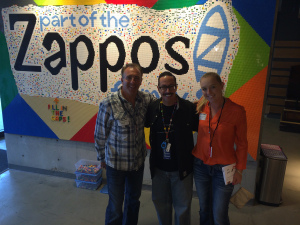
Jack Daly talked about three things an entrepreneur needs to have: having a vision, key people in key spots, and culture. You have a culture in your company, whether by design or not, and if you don’t implement the culture you want, then an unintended – maybe negative and unproductive culture – may develop. Jack also said that a positive, strong culture makes people get out of bed and want to come to work. An example of a great culture is Zappo’s. If you are ever in Vegas, go to the headquarters and experience the free tour. You will get a feel of an amazing culture.

Another take-away I had from the conference came from Jack. He said that if you are a small-to-medium business and don’t have a sales manager, one of two things will happen. You will stay small-to-medium, or you will go out of business. He added the CEO, the COO or the best sales person can’t play sales manager on a part-time basis. I think this hit home for a lot of people, given some conversations I had after his talks, and others like me will be taking steps to implement a sales management process.

The key note that really made me think about life and where I am now and where I am going was Steve Gilliland, who wrote the book Enjoy the Ride. His presentation was hilarious, along with eye opening and thought provoking. He asked if everyone made the same wage of say $2 an hour, where would you work? Would you still do what you are currently doing? I had an inner chuckle at this since I know I would be doing the same thing I am doing, given that I have done it many times over the years without getting paid at all. His focus was around having passion for what you do or it was a ride that you wouldn’t enjoy. Gilliland said, “Love what you do, love why you do it, and love who you do it with.”

This conference was very inspiring and beneficial from a business perspective, and I thank my friend John Bly for leading the charge to make this Nerve Conference happen. I will be discussing more going forward on building a culture by design and my experiences on what we are doing to make our sales process better.

Is Geo-Fencing on Your Map?

map pinsAs we continue to build mobile apps for clients, the advantages resulting from these apps are appearing limitless.  I have been in Charlotte this week for the EO Nerve Conference.  When I called for a taxi, they said that I can download an app that will send a taxi to me.  Not only that, but I can follow the taxi’s location as it comes to pick me up. How cool is that? This is the new wave of location-based services that is getting more popular and will help create a lot of conveniences, marketing opportunities and productivity.

Chris Shaffer, our technology lead at Efficience, says “The convergence of technologies, such as GPS and mobile broadband, allows users to leverage resources in ways that were unthinkable only 10 years ago.”  According to Shaffer, “Geo-fencing is one such feature that allows devices to become ‘location-aware’ by tracking through GPS or location-based services.”

We will devise a lot of new ideas and reasons to have this working for us in all kinds of situations.  Geo-fencing has created a new source of information that will revolutionize the way we interact with the world around us.

When you have the app of your favorite restaurant, it will know when you cross the virtual fence that they will designate, say like 3 miles from them. Restaurants will have ability to send you a notification of the special dish they have tonight or some type of discount. You already love to eat there and they just entice you to come back to spend more money with them, instead of all the other options you may have.

According to a study done by Pew Charitable Trust, 58% of adults access the internet through their mobile devices, which has been a big conversion away from the desktop. Smartphones are allowing us to get info and make choices that we didn’t have the information to do on the fly before. We check prices, watch movie trailers, and read about competitor choices as we are making decisions to spend our dollars.

Those that are connecting with their customers this way will have more flexibility, since a marketing campaign can be day-to-day or week-to-week. It can be tailored to the data that customers choose to give us so that we can meet their direct needs. Small businesses with limited budgets will have a much better way to compete with the big boys who wield massive budgets, just by having access to this technology. This will be mainstream in the not-too-distant future, but those getting in first will have a competitive advantage to attract customer dollars and grow their revenue sooner.

What are you doing to be ahead of the curve and benefit from location-based marketing?

Beware of the “Dark Side” of Entrepreneurism

As someone with lots of entrepreneurial DNA in my blood, what getsimages me excited are the opportunities that rise to their potential with lots of upside. We are working on a project right now that has lots of potential, and I feel situations like this help to bring a team together to work on something that could have an upside beyond existing expectations.

Near the end of last year, a couple of guys came to me and wanted to talk to Efficience about an idea they had to build a mobile app. They wanted to provide a cool way to look at what people are doing out there and share their thoughts. After some discussion, they proposed that we build the app for equity in the company. This is a tough thing to do, because if you build something and don’t get paid, you had better make sure that you have enough income from other projects to keep paying the bills or you will soon be out of business.

We had experienced investing our resources in a few different projects and getting them out there. However, seeing them not being accepted in the marketplace, in any way, was frustrating. Lots of our profitability was eaten up in R&D around the next idea – hoping for something to go viral and make the big bucks. But it didn’t!  Why should we try again? Well, 1.Because you can’t help yourself when it is in your blood and 2. Because if you don’t keep trying, you will never provide the opportunity to truly succeed.

Over time, I have been made aware of how chasing these opportunities can get you into trouble and open you up to the “dark side” of entrepreneurism, as was described by Steve Wynn at the 2007 EO 20th Anniversary Celebration in Las Vegas. He said that the need to seek out opportunities that may push you to put it all on the line for the next big thing is addictive and scary, but it gets the blood moving for those of us with the itch. Wynn did this when he started his casino. He put it all on the line and almost lost it all.

You may recall a blog I wrote on how entrepreneurs suffer from overconfident optimism – another area that can create blinders to the reality of your situation and get you in trouble. There are a couple of ways to deal with that, as I discussed in the blog, and they are doing a premortem and firing bullets that Jim Collins reveres to in his book, Great by Choice. The approach that we have taken is to fire a bullet and not bet everything on one idea or situation.

Having our business flow with processes that work on getting projects done and getting business in the door has to be done first. Then we can test out ideas that could be big, as in fire bullets but not bet the farm on one idea that will risk everything.

So my main point is that those of us that get caught up in the entrepreneur euphoria, just be aware of the “dark side” and the over-confident optimism that seems to follow, and take steps to rein it in before it gets us into trouble.

Think It Into Reality

create realitySo you have had a hard day and you have lots of things coming at you – work, deadlines, bosses, personnel issues, organizing a family – and you feel overwhelmed with it all. Your brain is about to explode. Feel like this often? I do at times. How does it make you feel to know that, according to famous Harvard professor and psychologist William James, the average person uses only 10 percent of his mental power? Wouldn’t it be nice to use more?

How can we use more of our brain to not feel so overwhelmed, and more importantly to become the highest version of ourselves that we are seeking to become? An author that had a huge impact on me was Napoleon Hill, from the legendary book Think and Grow Rich. This book instills that your mindset and beliefs are what control your life. From all the research that Napoleon did with the wealthiest of men back in the early part of the 20th century, he realized that what you think about is what you are.

So let’s think about that. What are the dominating thoughts that are in your mind? Do you find yourself thinking and saying things like, “That is only for rich folks.” or “I will never earn enough money to buy a house like that.” or “He is filthy rich!” So what is so filthy about having money? Bill Gates and Warren Buffet don’t look so dirty, and on top of that, they are out creating jobs and bettering the world with all the great things they are doing with their money. If we think money is bad, dirty or evil, how are we going to attract it to us in the quantities that we really desire?

I found that early in my career, I had negative thoughts – like I wasn’t good enough to have lots of money or that it wasn’t possible. It was books like Napoleon’s and others I read that helped me set in place the right mind set to believe that I could have success and the money that I desired. You do this by creating positive statements about your success and wealth and stating them as if they are happening right now.

The subconscious will believe what you think about and set you in motion to get what you are after. This doesn’t mean that you can’t go backward once you have success or accumulated some wealth. Then, you have look at what you have been thinking about and determine whether your thinking is pushing you forward or holding you back.

I was reminded of how I was holding myself back, and how I still might at times, by reading Five Things You Need to Succeed According to Napoleon Hill. I know I let things get in my head that I don’t want there, and so I go back and read and implement things that are discussed in Think and Grow Rich and another great book like the The Answer.

Do you feel like you are getting all you can out of your brain or are you holding yourself back with negative thoughts? Change your belief and change your life, as many great ones have said.

Are We All Salespeople?

salesmanOver the past few months, I have been contemplating and researching speakers that would be a good fit for the EO Argentina University in November in Buenos Aries. Our theme for the university is “Tango with the Unexpected.” As co-chair of learning, I am working to bring in people that will meet EO expectations, which are very high, and relate with our theme. One speaker I would like to bring in is Daniel Pink. However, given he is in such high demand, I am not sure we can fit into his schedule or he can fit into our budget.

Pink has written five books. I have read three of them and working on the fourth now, which is his current one: To Sell is Human: The Surprising Truth about Moving Others. Pink’s work is always out on the edge and really takes a look at ideas, ways of life and thinking, digging deeper to find new meaning or a different perspective. He did that with his book Free Agent Nation, which I read in the early 2000s, and with Whole New Mind: Why Right Brainers Will Rule the Nations. Then, he really hit a nerve with people when he came out with Drive:The Surprising Truth about what Motivates People. This work changed a lot of people’s minds. I did a blog on it, discussing how we should motivate others and had several findings that were unexpected.

I will provide a sneak peek into what Pink has done with To Sell is Human, because it holds a surprising twist on how we see people that sell, suggesting that every one of us is selling in just about everything we do. When Pink sat down and took an in-depth look at what he had done over a two-week period, he realized that within the conversations – emails, texts, calls, and meetings – he was trying to get people to part with resources.

Most don’t like hearing that they are sales people.  Selling can be perceived as trickery and deceit. But as Pink describes, things have changed and that is not the world we can play in – not if we want to succeed in selling. Pink creates a discussion around how sales has changed more over the last 10 years than over the previous 100. Further, our assumptions about it have changed.  We still have about 1 in 9 people engaged in sales today, and the other 8 of 9 are indirectly involved in sales. Pink says, “We’re persuading, convincing and influencing others to give up something they’ve got in exchange for what we’ve got. “

An interesting point that he brings up in the book is that as business owners, we are supposed to send our sales people out to solve problems. What Pink discovers is that it is more about going out and helping people to find their problems. That is different, isn’t it? He discusses that an effective way to move others is to uncover their challenges. For sales to have meaning, he gets into discussing that it needs to be made personnel and purposeful.

Is your approach to sales working for you currently? I will have to say that is has been a struggle for us.  If it is the same for you, maybe a radical way of changing our thinking around sales is what is needed to make them better. Check out this short interview that Pink gave on his key discoveries for the book.

Video Link: http://vimeo.com/61559527


It’s a Give and Ask Business World

I have written a few blogs from David Meerman Scott’s books and blogs because they relate so much to the social media world we are in today. Scott’s work is all about creating a worldwide rave around what you offer, by putting valuable content out on the web that will build credibility and create value for others. He also discusses using current events to leverage more interest and exposure around what you offer the world.

<a title=”Amanda Palmer: The Art of Asking” href=”

Amanda Palmer: The Art of Asking

So I will ask you, are you giving away content on the web that is valuable to others – especially your clients – that attracts them to you? That is the focus of a recent blog that Scott wrote that was based on a TED talk titled “Amanda Palmer: The Art of Asking.” In this very interesting TED talk, she discusses her experience of going from a bridal statue and giving out flowers for money, to an alternative rock singer giving her music away for free.

From the experience of learning to ask for money on the streets, she gains an awareness of a connection with people that, to her, was profound. This connection, she realized, overflowed to how she blogged and related to her crowd in that they just gave her money. She then peeled away from her label and did a crowd-funding approach. She hoped to raise $100k, and instead, she raised $1.2 million. She realized that people just want to help when you build a connection and just trust them.

So from a marketing approach, what David recommends is that you give your value content – like blogs videos, infograpahics and full-length ebooks. He says give your best stuff away for free, and build the relationship that comes with being vulnerable.

Next, do as Amanda does and ask them to help you. She says, “Give and receive fearlessly. Ask without shame.” Then, just like the video discusses, David asks if you need a speaker at your next conference.

What are you giving away and asking for help from those whom you provide value?

Are You Confronting the Brutal Facts?

good to greatWe have had a nice run in the markets over the past few weeks, hitting record highs for seven consecutive days. It would seem like good times ahead and I would so much like to jump on that bandwagon. I have seen this before and it makes me very cautious, given what is probably ahead. With any market and economic difficulties, there is always opportunity. The key signature of the DNA in a real entrepreneur is always being in search of opportunities in any environment, and then acting on them.

When looking for opportunities, we must first practice the Stockdale Paradox, which is coined by Jim Collins in his book Good to Great. In the book, Admiral Jim Stockdale makes observations of those that survived being prisoners of war in Vietnam and those that did not. Admiral Stockdale was there for eight years and endured the most brutal of situations.

When asked “Who did not make it out?” Stockdale replied, “The optimist.” He shared that they would say, we will be out by Christmas, Easter, and Thanksgiving, and when those markers came and went, the POWs would die of broken hearts.

He went on to say to Jim “This is a very important lesson. You must never confuse faith that you will prevail in the end – which you can never afford to lose –with the discipline to confront the most brutal facts of your current reality, whatever it may be.”

So what are the brutal facts of our reality? We have a huge amount of debt ($16 trillion) that is as much as the combined total of all the goods and services transacted in one year for the US economy. Each year the bureaucrats are spending $1 trillion more than they take in from taxes, so we are adding a trillion to the total debt each year. The worst part is they don’t show any desire to stop spending! We have major uncertainties of how all the tax increases, more government controls, and medical health care changes will affect our businesses.

The fear and uncertainty makes people sit and wait it out, for the most part. We are experiencing some positives now because of pent-up demand. Some areas don’t have enough new homes to account for the demand. Some businesses are spending on things that they have been putting off for a long time and can’t wait any longer.

This is not the environment of record-breaking stock markets that means things will change. I was in the investment world when the Fed flooded the markets during the late 90s and worried about lots of things, but mainly Y2K. This money mostly went into stocks and drove the markets to a massive bubble that soon burst. Sadly, I watched my money and that of so many others lose unfathomable sums.

Because of the brutal facts and my experience, I am being careful about the markets and business investments. I am also keeping an eye on any opportunities that may arise, given major changes that may occur. Remember that companies like General Electric, IBM, Disney, Burger King, Microsoft and Apple, all were founded in major recession or great depression. Opportunities are not limited to the good times.

Follow the Big Trends or the Small Ones?

Aside

I have talked to a lot of people about the big trend of mobile, the growth in this area, Imagehow it is changing the way we do business, and how if we don’t want to be left behind, we need to adapt. Some of this has a longer time horizon and some of it needs to be thought about in the short-term. The point is that this is a Macro trend that is happening and one that may be less of a concern than building your small tribe of followers that make a difference to the revenue and profits of your company.

Seth Godin’s blog on Macro Trends Don’t’ Matter so Much, makes a point that I agree with for the more focused, short-term aspects that drive your business.  He says that the Macro trends, like internet subscribers some year in the future, or the number of Spanish speakers as a percent of world population, are not the key drivers to your growth and the group you are after.  We could add things like, Who will have more in Apple’s IOS or Android’s platforms by 2020? What percent of the world total output will China make up in the next 20 years?

These trends are nice to watch, and some of you may want to think about it more than others. However, the key is that most companies and organizations need dozens, hundreds, or thousands to make a difference in their world. They don’t need access to all Spanish speakers, to all internet subscribers, or all those on Apple’s platform. What they need is the ability to spread the word among a tribe of followers that are like-minded and passionate about your unique “purple cow” offering.

This is where you what to really drill down into who your client is and what it is he wants. Robert Bloom, in his amazing book “The Inside Advantage,” gives us a step-by-step process for drilling down to the true look and feel of who your client is and what is unique about what you are offering him.  Knowing your customers in this way will allow the laser-like focus to zero in on your tribe.

Finishing up in Seth’s blog, he says that the big trends are a numbers game, and that by realizing that, you are “treating the market as an amorphous mass of interchangeable parts.”   You realize the micro is more important than the macro and that it is about the people – that we are individual human beings and we have names, desires, wants and interest.

What is your micro group that you are focused on?